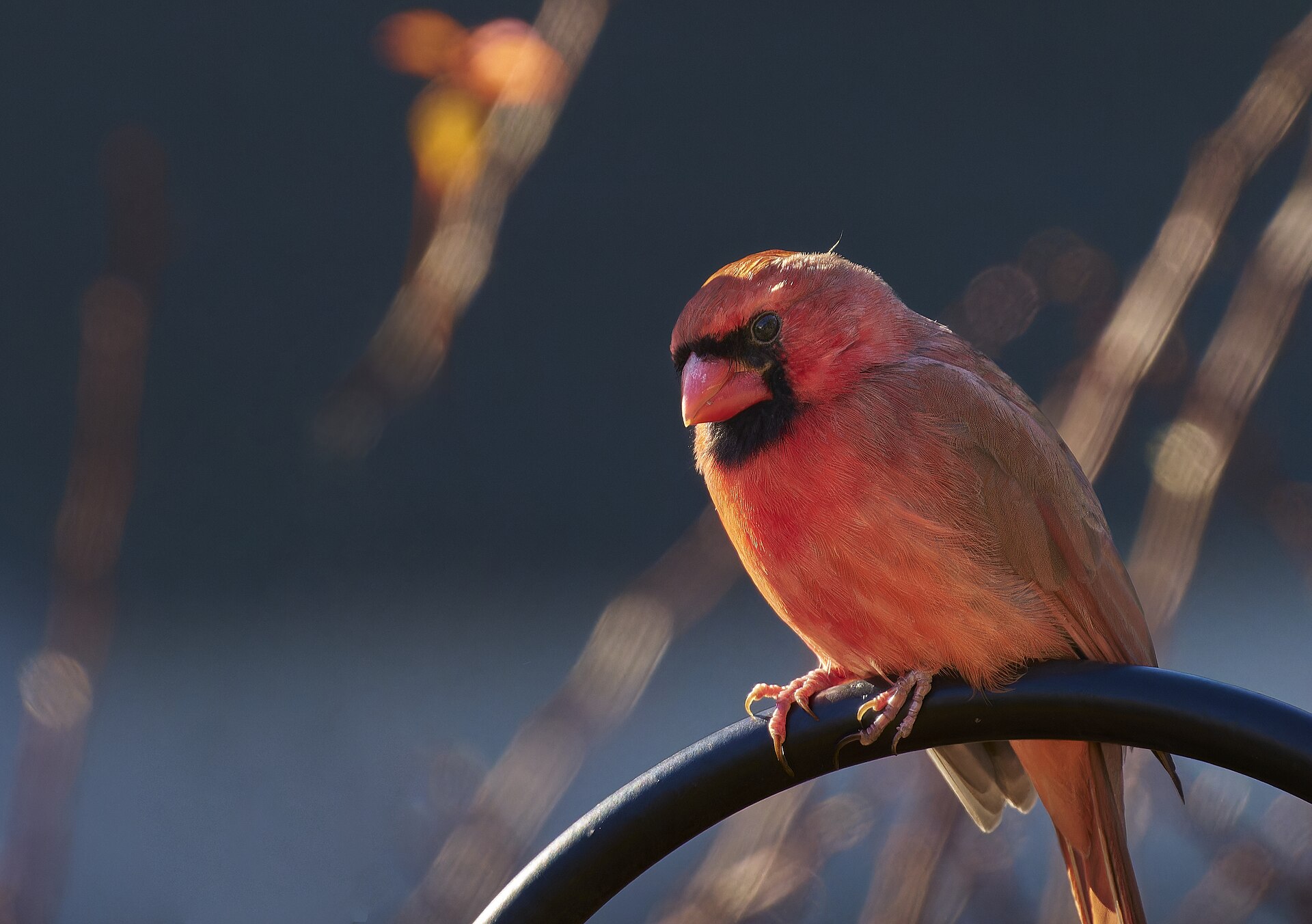
Red-crested Cardinal
An introduced Hawaiian songbird that can be enjoyed as an observation but should not be actively encouraged with food or nest sites.
By Birdly Yard Editorial TeamReviewed Updated
Local season
Months with a state-level historical signal for this species.
Status
Backyard reports
Look for it
Look on the ground in semi-open agricultural, urban, park, and residential settings in established Hawaiian populations.
Food
Seeds, grains, fruit, and invertebrates gathered on the ground and in low vegetation.
Nesting
Natural nesting guidance
Red-crested Cardinal habitat
Prioritize native Hawaiian plants and resources for native birds instead of adding cover or nesting sites for an introduced cardinal.
Red-crested Cardinal diet and food
Seeds, grains, fruit, and invertebrates gathered on the ground and in low vegetation.
Do not install food or a feeder specifically for this introduced species; keep fallen seed and food waste managed.
Red-crested Cardinal nesting and breeding
Builds a cup in trees or shrubs; do not add a box or disturb an occupied nest.
Red-crested Cardinal behavior and where to look
A long-crested bird that commonly feeds on open ground in pairs or small groups.
Photography
Observe from an established path or patio without food, playback, or close approach to a nest.
What to avoid
Do not feed to increase an introduced population or let seed accumulate around structures.
Continue exploring
Explore related bird guides
Compare food, habitat and nesting. Local seasonal records vary by species.