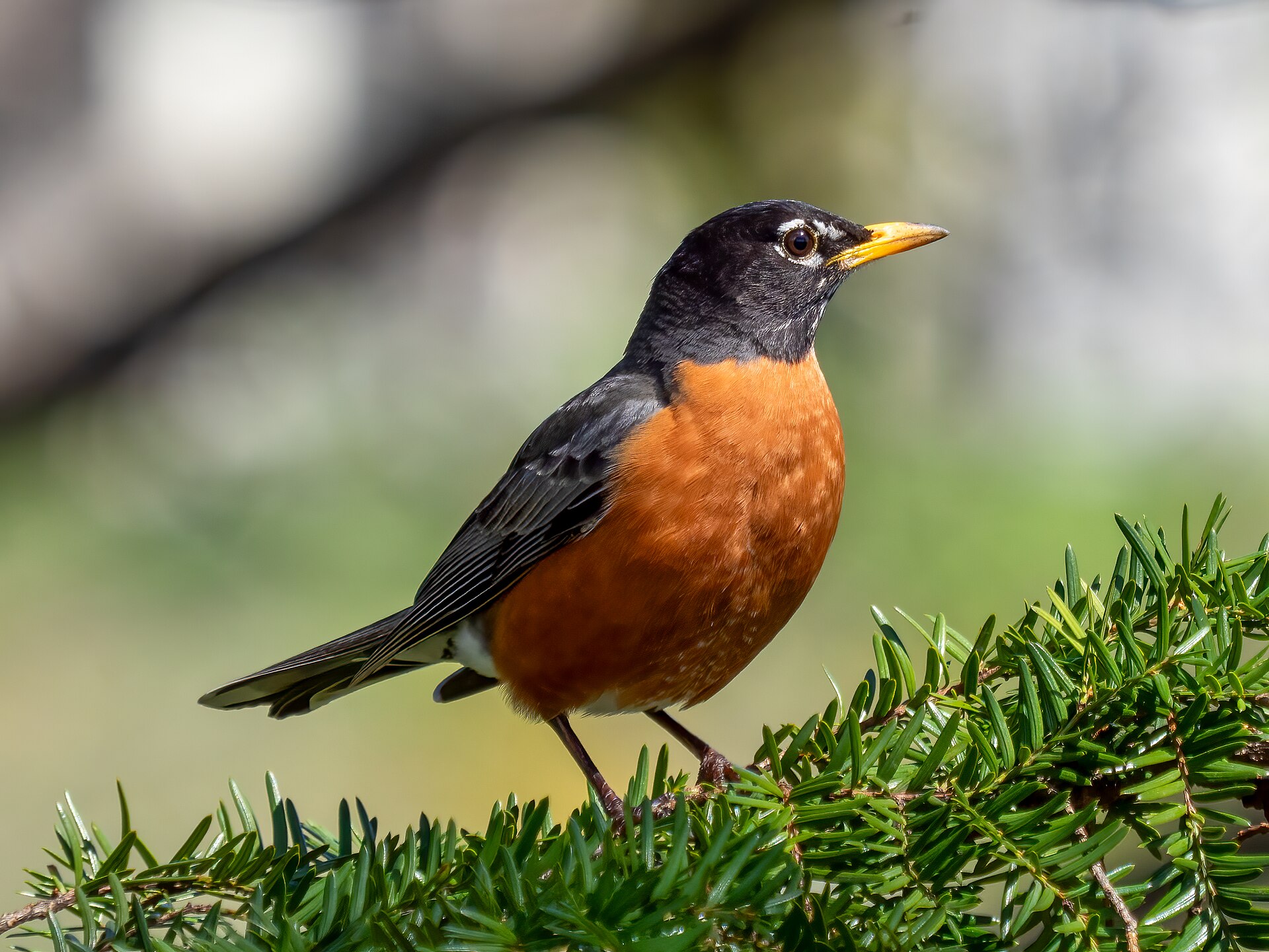
American Robin
A lawn-and-tree visitor that often benefits more from water, fruit, and healthy soil than from a seed feeder.
By Birdly Yard Editorial TeamReviewed Updated
Local season
Months with a state-level historical signal for this species.
Ways to support American Robin
Choose a starting point for American Robin. Open a setup to see the supplies, steps and checks for your location.
Native fruit in season
Locally suitable plants with ripe fruit
See setup & checksA covered nesting shelf
An open ledge with overhead shelter
See setup & checksResource illustrations are not complete nest-box designs or a promise of visits.
Status
Historical seasonal record
Look for it
Look across lawns after rain, beneath fruiting trees, and along the edges of mature shade trees.
Food
Earthworms, insects, berries, and soft fruit.
Nesting
Natural nesting guidance
American Robin habitat
Open lawn for foraging beside trees and shrubs for cover gives robins a useful everyday route.
American Robin diet and food
Earthworms, insects, berries, and soft fruit.
Robins do not rely on standard seed feeders. Offer shallow fresh water and fruiting plants instead.
American Robin nesting and breeding
Builds an open cup nest in trees, shrubs, ledges, and sheltered human structures.
American Robin behavior and where to look
Often pauses upright on a lawn, then runs a short distance to hunt. Early mornings are especially active.
Photography
Photograph from the lawn edge with a clean, low background. Do not approach an occupied nest.
What to avoid
Avoid pesticide use on lawns. It removes the insects and invertebrates robins depend on.
Continue exploring
Explore related bird guides
Compare food, habitat and nesting. Local seasonal records vary by species.


